I’ve worked with many brides over the years, and there’s one question that comes up again and again.
“Can you recreate this exact look for me?”
Most of the time, it’s a saved Instagram photo. Sometimes it’s a celebrity, sometimes another bride, sometimes even my own previous work.
And I completely understand the intention behind it.
When you see something beautiful, you naturally want that same feeling for your wedding day.
But there’s something I always explain gently—and honestly.
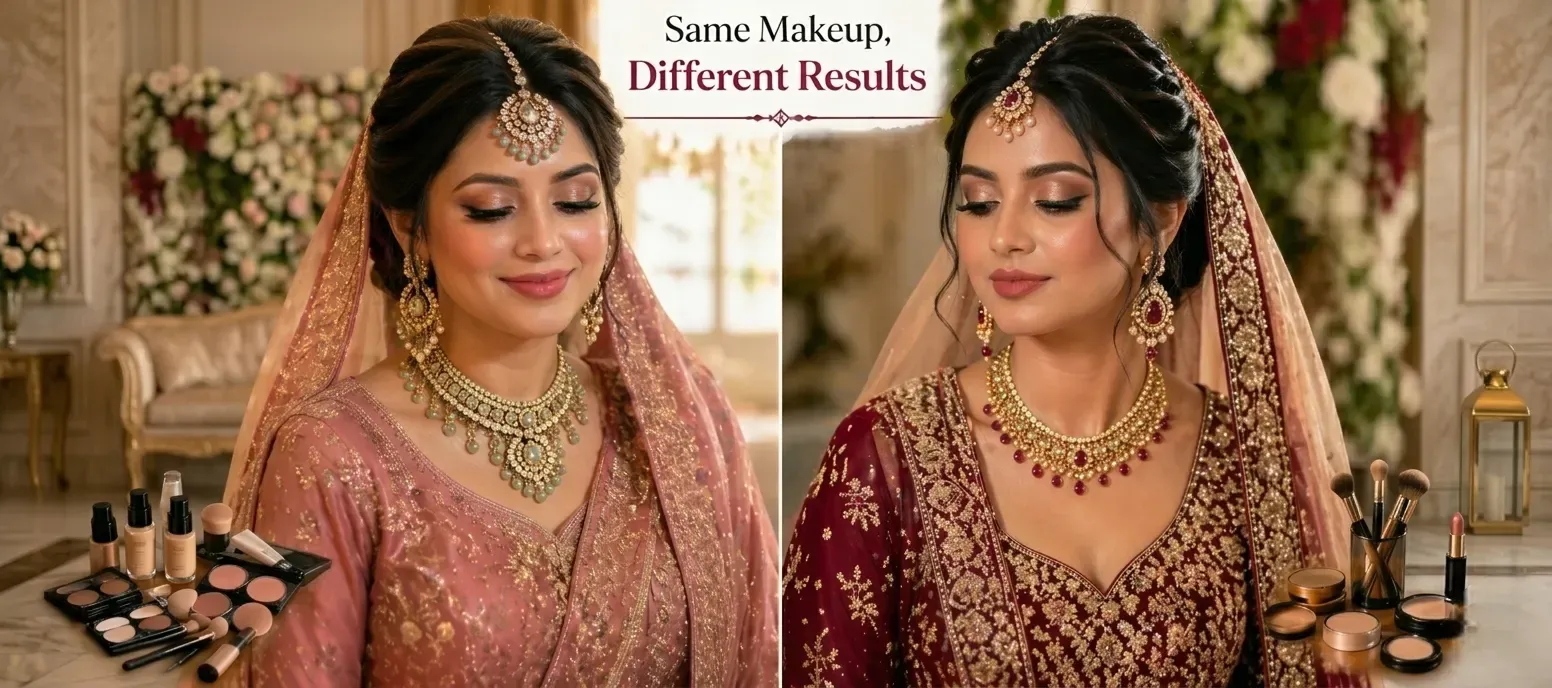
Even if I use the same products, the same shades, and the same techniques…
the result will still look different on you.
Not because something is wrong.
But because your face is not the same.
And once you truly understand this, your entire approach to bridal makeup changes.
What Actually Changes the Way Makeup Looks on You
From experience, makeup is never just about products.
It’s about how your natural features interact with those products.
Two people can wear the same foundation, lipstick, and eye look—and still look completely different.
Here’s why.
Your Undertone Matters More Than You Think
Most brides choose foundation based on whether they are fair, medium, or dusky.
But the real difference comes from undertone.
Some skin has a warm, golden base.
Some leans pink or cool.
Some sits neutral, somewhere in between.
This undertone affects everything.
A lipstick that looks soft nude on one bride can look bright peach on another.
A red can look deep and rich on one, slightly orange on someone else.
This is why blindly copying shades rarely works.
For makeup artists, this is where real skill shows—not in applying products, but in adjusting them.
For brides, understanding your undertone even slightly can save you from feeling “something is off” on your wedding day.
Facial Structure Changes the Entire Balance
Makeup doesn’t sit on a flat surface—it sits on structure.
Eye shape, lid space, brow bone, cheekbones, jawline… all of these affect how a look appears.
For example:
- A cut-crease eye may look sharp and defined on deep-set eyes
- But the same technique can look heavy or crowded on hooded eyes
A bold contour may enhance strong bone structure
But it can look harsh on softer, rounder faces
This is why a look that feels “perfect” in a photo might not translate the same way in real life.
Because that photo belongs to a completely different face.
Not Every Face Carries Bold Makeup the Same Way
This is something I’ve observed repeatedly.
Two brides choose the same bold eye makeup.
On one, it looks balanced and striking.
On the other, it feels slightly overpowering.
The difference often comes down to contrast.
If your natural features already have contrast—like darker hair, defined brows, or sharper features—bold makeup blends in more naturally.
If your features are softer, the same intensity needs to be adjusted.
Not reduced—just balanced.
This is something photos online don’t show.
They show the result, not the customization behind it.
Skin Condition Changes the Final Finish
Makeup always sits on skin. It doesn’t replace it.
And this is one of the most underestimated factors.
If the skin is well-prepped—hydrated, smooth, and healthy—makeup looks seamless.
If there’s dryness, texture, or congestion, even high-end products have limitations.
They can improve—but not completely hide.
This is why I often tell brides:
Start focusing on your skin at least a few weeks before your wedding.
Not aggressively. Just consistently.
Simple things—hydration, gentle skincare, regular routines—make a visible difference.
For makeup artists, this is where prep matters more than product.
Because the finish of your base depends more on the skin than the foundation itself.
Lighting Changes Everything (More Than You Realize)
This is something most brides only notice after their wedding.
Makeup is highly dependent on lighting.
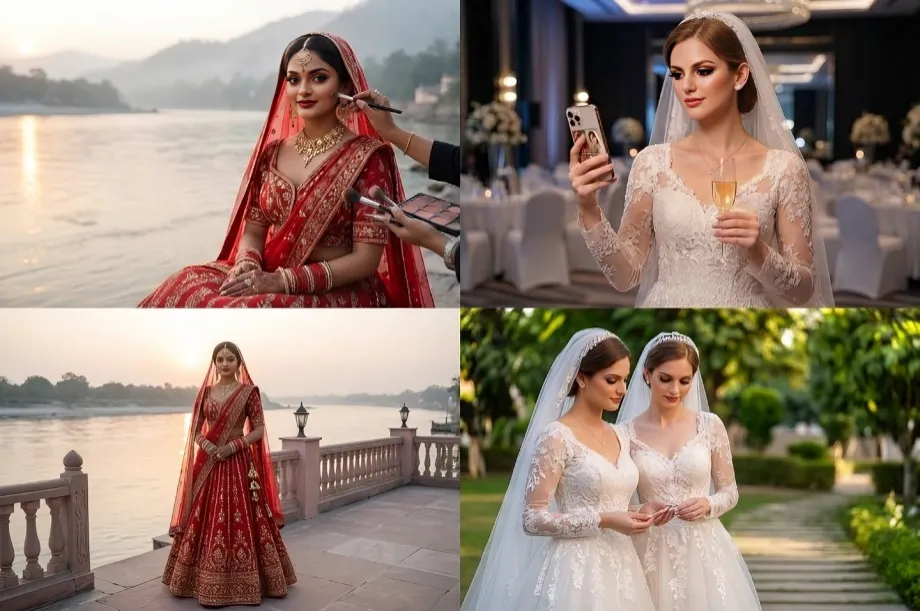
In outdoor weddings—like many in Rishikesh—natural light softens everything.
It makes makeup look fresher, lighter, and more blended.
In indoor or evening functions—like receptions in Chandigarh—artificial lighting can intensify the same look.
Flash photography, stage lights, warm lighting—they all affect how makeup appears.
That’s why a look that feels “perfect” in person may look stronger in photos.
Or a subtle look may disappear under heavy lighting.
A well-planned bridal look always considers:
- time of the event
- location
- lighting setup
Not just the reference photo.
Climate and Environment Also Play a Role
This is something that becomes very clear in real weddings.
In a summer wedding in Haridwar, humidity can affect how makeup sits and lasts.
Heavier layers may break down faster.
Skin may produce more oil.
The solution isn’t always more product.
Sometimes, it’s lighter layers, better prep, and the right setting techniques.
In cooler or hill areas, dryness becomes the concern.
So the same makeup approach cannot be applied everywhere.
This is where experience matters—not just skill.
Real Situations I’ve Seen
In one outdoor wedding near the Ganga in Rishikesh, a bride wanted a bold glam look. As a bridal makeup artist in Rishikesh, I’ve seen how natural sunlight changes everything. In natural daylight, the look felt slightly harsh. We softened the eyes, adjusted the lip tone—and suddenly everything looked effortless.
In a humid wedding in Haridwar, the issue wasn’t covered. It was long. Working as a bridal makeup artist in Haridwar, I knew adding more products wouldn’t help. Instead, we focused on skin prep and strategic layering—and the makeup held beautifully through the ceremony.
In a reception in Chandigarh, one bride carried bold eyes confidently.
Her friend chose the same look.
But on her features, it felt heavier.
That’s when the difference becomes undeniable.
Makeup is not copy-paste.
A Small Shift That Changes Everything
Over time, I’ve realized something simple—but powerful.
The question is not:
Can this look be done?
The real question is:
Will this look suit this face?
That one shift changes everything.
It moves the focus from imitation to personalization.
And that’s where the best bridal looks come from.
What Actually Works for Brides
If you’re planning your wedding—whether in Dehradun, Rishikesh, Haridwar, Uttarkashi, or Chandigarh—a few things make a real difference.
Understanding your undertone
Observing your natural features
Matching makeup with your outfit and timing
And most importantly—doing a proper trial
A trial is not just a formality.
It’s where you see how makeup actually looks on you—not on a screen.
For makeup artists, it’s also where trust is built.
One Thing Most Brides Don’t Realize
Even if everything is the same—products, techniques, shades—
your face will still interpret it differently.
And honestly, that’s not a flaw.
That’s the beauty of it.
Because in the end, your bridal makeup should not look like someone else.
It should look like you—just more refined, more confident, and ready for one of the most important days of your life.
Final Thought
Makeup is often called an art.
But it’s not about repeating the same look again and again.
It’s about understanding the face in front of you.
And when that happens, the result doesn’t just look beautiful —
It feels right.
FAQs
Can I get exactly the same makeup as a celebrity or Instagram bride?
You can recreate a similar style, but it won’t look identical. Your features and skin will always change how it appears.
How do I know which makeup suits me best?
A bridal trial helps the most. It lets you see what works on your face instead of guessing from photos.
Does skin prep really matter?
Yes. Good skin makes makeup sit better and last longer. It often matters more than the products used.
Why does makeup look different in photos?
Lighting plays a big role. Natural light softens makeup, while artificial light can make it look stronger.
Should I follow trends?
Trends can inspire you, but they shouldn’t decide your look. What suits your face matters more.